FIRELINE: A FOUNTAIN OF KNOWLEDGE
By Laura King
As is so often the case, this issue of Wildfire features some new writers with new perspectives.
Silvie Fojtik’s cover story about her travels during the off season in Canada to fires and training sessions in Mexico, Costa Rica, Argentina, and Spain provides a glimpse of the programs that bring instruction, networking, and real-life application to places experiencing wildfires.
Fojtik is a firefighter, photographer, and creative storyteller, and her journey (pages 20-26) tells a tale of passion, interest, professionalism and teaching.
Fojtik’s experiences at a Women in Fire Prescribed Fire Training Exchange event in Mexico and a women’s wildland firefighter camp in Costa Rica highlight the demand for female-specific training and the brilliant women instructors who have tirelessly advocated for fire safety and helped to organize the sessions.
“It was an honour to also be in the presence of Costa Rica’s Luisa Alfaro, a powerhouse I had the fortune to meet,” Fotjik says.
“For decades, Alfaro has been a lead consultant to the U.S. Agency for International Development (USAID) in emergency management in Latin America; she started a mission 24 years ago to knock on every country’s governing office to establish the incident command system (ICS) Latin America wide. A 2017 post by USAID celebrated Luisa’s contributions and boasted about the more than 20,000 firefighters trained by Luisa!”
Rhodri Jones, a fire investigator who is the technical lead for fire safety with the UK civil service, came to write for Wildfire through contacts on our communications committee. Jones explains on pages 16-18 that despite the growing number of wildfires in the England, Scotland, Northern Ireland and Wales, wildfires in the UK are not forensically investigated.
“Understanding wildfires, through investigations,” Jones says, “will help to prevent and mitigate incidents and provided a clearer picture of necessary resources.”
Jones’ 2023 Wildfire Investigation Project Report notes the importance of considering human dimensions.
“Wildfire investigation goes far beyond the mechanics of fire; it encompasses human behavior, socio-economic factors, and psychological drivers, equipping authorities to anticipate incidents, understand trends, and prevent recurrence,” Jones says.
“In the UK context, where deliberate and accidental ignitions occur in roughly equal measure, the ability to distinguish motives and patterns is essential for effective policy, resource allocation, and community safety.”
Eugene Gerden is a freelance writer in Russia whose byline appears in myriad trade and professional journals. Gerden’s overview of wildland fire in China (pages 30-33) looks at the country’s wildland fire prevention and mitigation efforts.
Although there is some varying data – depending on the source – there’s agreement that government efforts since 1998, when the Forest Fire Prevention Regulations were introduced, have made a difference.
State figures indicate wildfires in the last couple of seasons were at historic lows, but some media agencies have reported seemingly contradictory information about a lack of state-provided equipment contributing to fire fatalities.
One fire-prevention strategy under consideration is to more aggressively hold people accountable for starting fires; as is the case in many regions, human-caused fires outnumber fires started by natural phenomenon such as lightning.
However, a new wildfire investigation framework is under development and has the support of several wildfire agencies.
Although climate change plays a significant part in the increase in wildfires, Jones notes that wildfire is affected by “politics, culture, infrastructure, psychology, and deliberate human action.
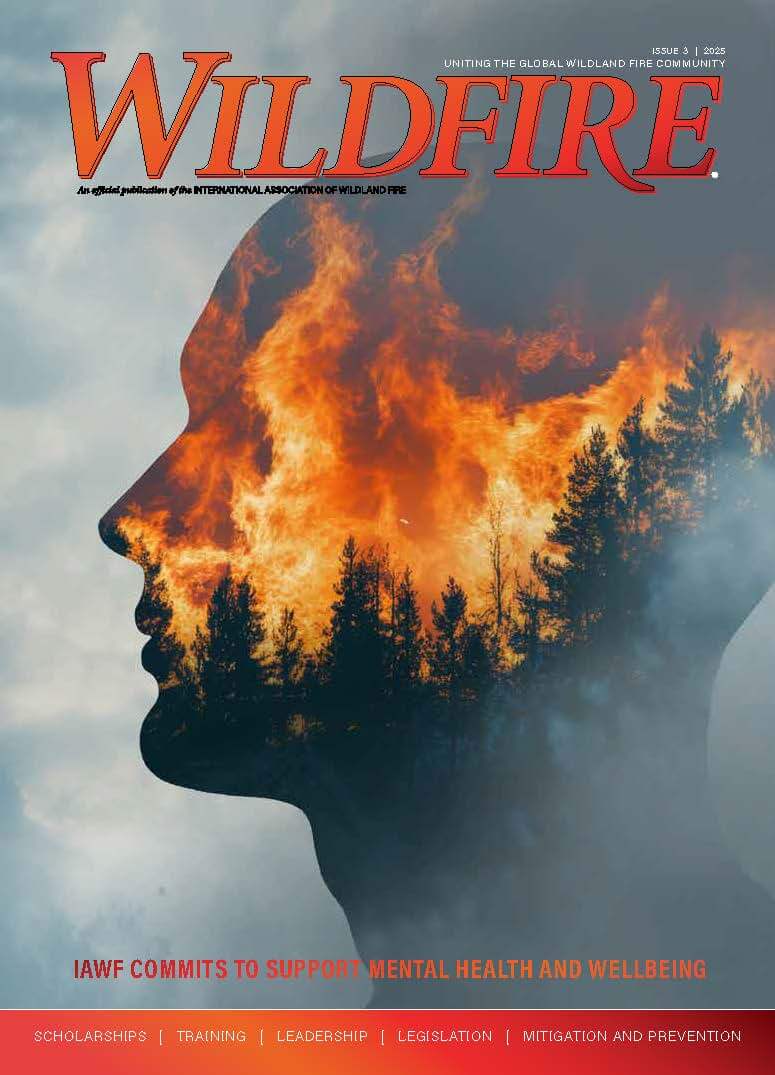
This issue of Wildfire is our first fully digital edition. Let us know if you like the digital format, and follow the IAWF socials – Facebook, Instagram, and LinkedIn – for magazine highlights, conferences and other events, and engage. We’d love to hear from you!

Managing editor Laura King is an experienced international journalist who has spent more than 15 years writing and editing fire publications. She is the Canadian director for the National Fire Protection Association (NFPA), works closely with FireSmart™ Canada to help residents build resilience to wildland fire, and has participated in the development of the Canadian wildland fire prevention and mitigation strategy.