AUSTRALIA: MORE DATA REQUIRED TO DETERMINE AIRCRAFT EFFECTIVENESS
BY MATT PLUCINSKI, NICK MCCARTHY, OWEN PRICE, AND DEB SPARKES
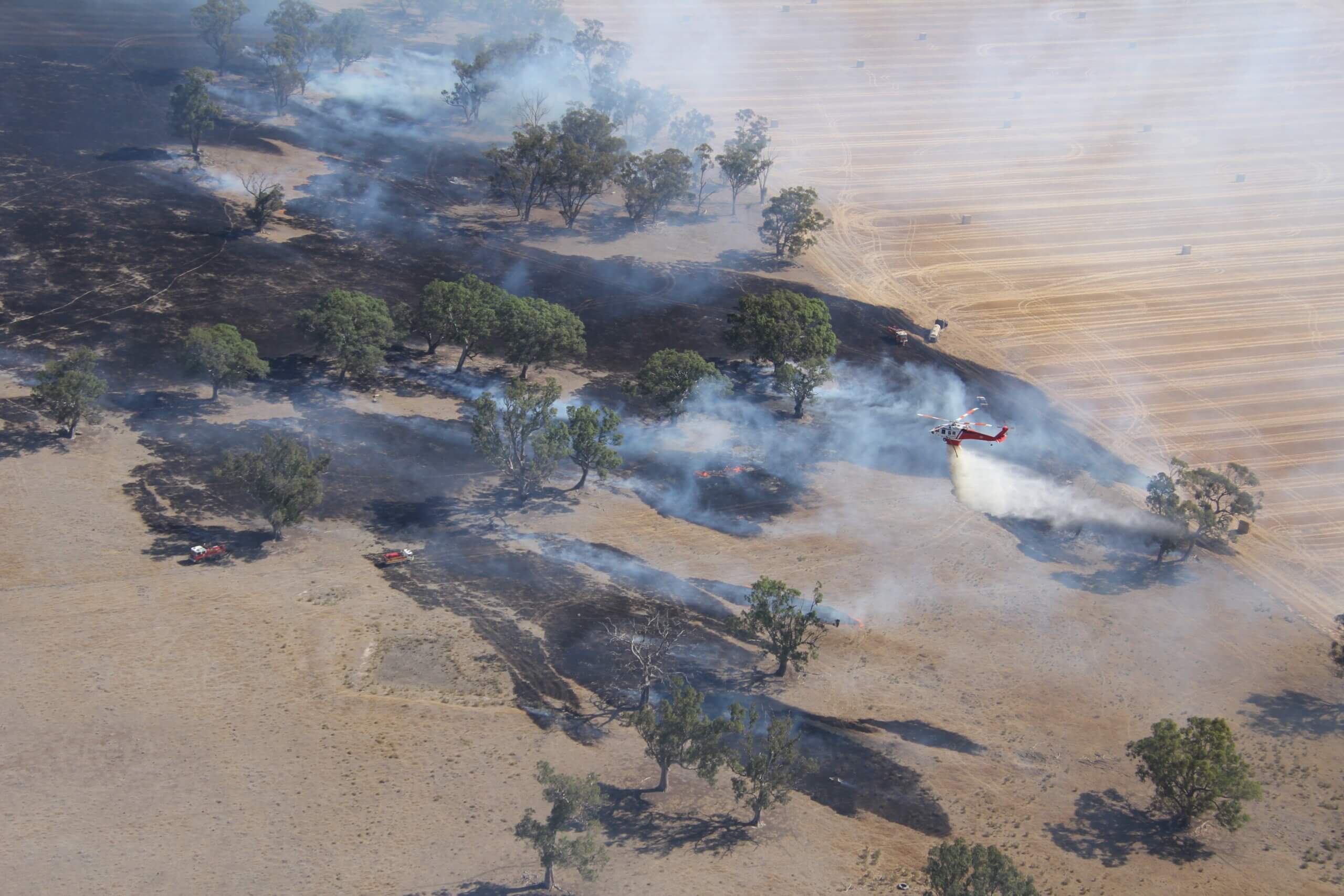
Firefighting aircraft have become more common in Australia over the last few decades.
Current fleets, managed by states, territories and the federal government, comprise of a mix of light and heavy, fixed- and rotary-wing aircraft with a range of capabilities and capacities.
This fleet has evolved over decades through experience, with different aircraft models selected for different environments based on the accessibility of filling points, terrain and obstacles associated with built environments. Firefighting aircraft are more readily deployed to incidents than in the past and are often relocated across state borders in response to fires and anticipation of elevated fire danger conditions and related spikes in fire activity.
Wildfires are managed by state and territory governments in Australia; multiple agencies share responsibility within each state depending on land tenure and location.
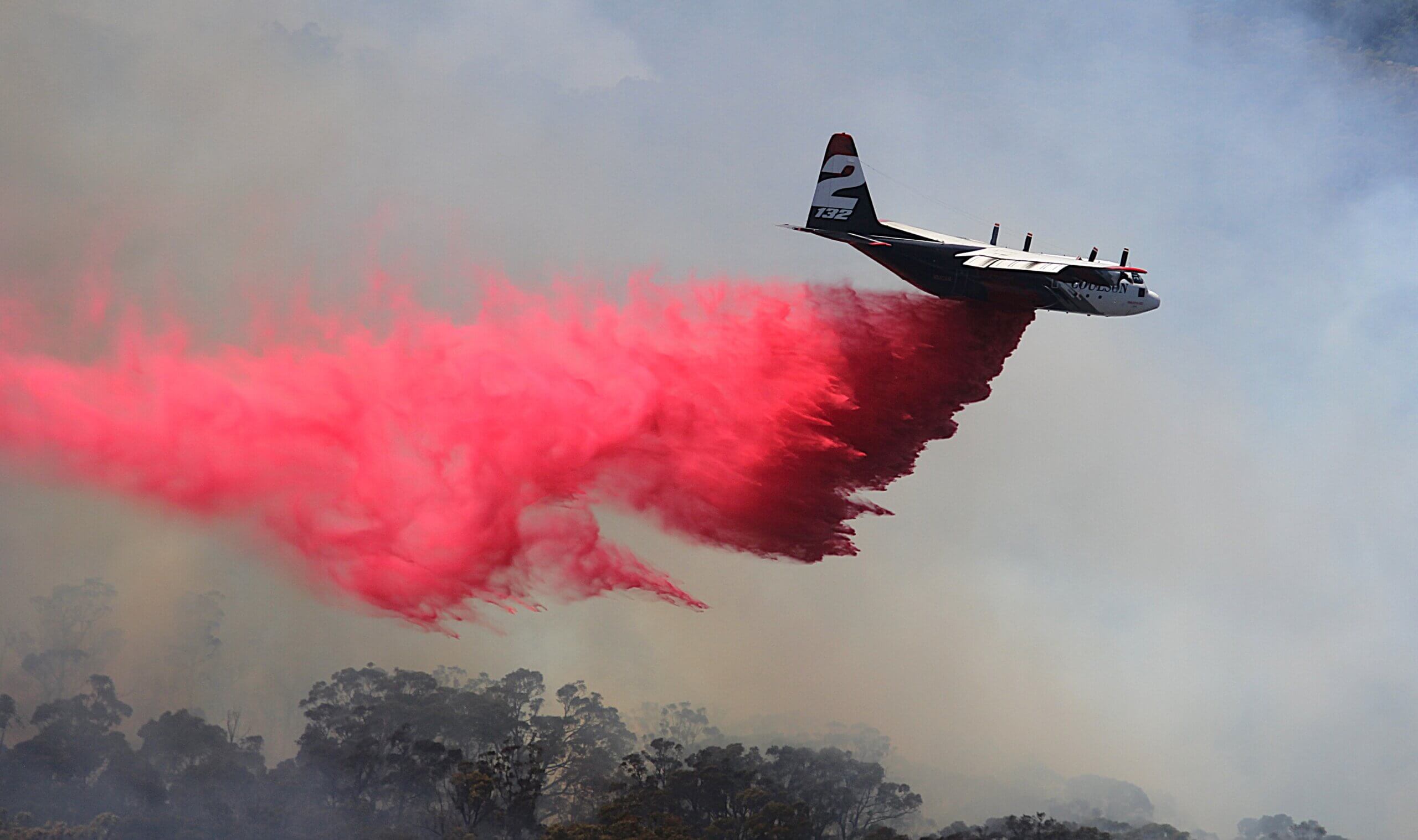
Most aircraft are contracted from local companies, with larger aircraft bought in from overseas for the high fire danger period. Some agencies have recently begun to purchase aircraft, citing the need for availability during the whole year and a desire for multiple-purpose aircraft.
The unique geographies and arrangements within Australia’s eight state and territory jurisdictions mean firefighting resources are used in a variety of conditions and applications. While aircraft are mostly used to drop suppressants and retardants, they also perform other important roles, such as intelligence gathering, supervision, transport and ignition.
There is little quantitative knowledge of, or data describing, how aircraft are used on Australian fires or how effective they are.
Most the existing operational understanding of suppression effectiveness is anecdotal, highly personal and difficult to compile. Most published data are limited to counts of hours flown, drops made and contracting costs. Inquiries after the devastating 2019-20 Black Summer fire season have made recommendations that research and evaluation into aerial firefighting be undertaken to address this lack of knowledge. The federal government has expressed support for this research and for evidence-based understanding of the capability required for an operationally effective fleet to meet current and future needs.
Knowing how aircraft are used during bushfire suppression operations is critical to understanding their effectiveness and will help provide a basis for promoting their effective use. This knowledge would also allow the comparison of usage patterns with intended use. Being able to identify situations in which aircraft are beneficial to suppression operations and those in which they are less so will enable the prioritisation of effective use and improve overall impact and cost efficiency. Restricting the use of aircraft in situations in which they are less likely be effective will also help to alleviate their scarcity and reduce aircrew exposure.
Effective suppression actions lead to desired outcomes for a fire. Successful outcomes can be more readily assessed when compared to explicit pre-defined objectives, which may include containment goals that relate restricting fire extent and impacts within specified time and spatial bounds. Assessing the effectiveness of high-cost resources, such as aircraft, should also consider their benefit in relation to lower-cost alternatives.
The availability of, and difficulty collecting impartial, representative and reliable operational data is a major limitation for bushfire suppression effectiveness research. There are also many diverse and interlinked variables that influence suppression effectiveness that must be considered when evaluating suppression effectiveness, such as those related to fire behaviour, environmental conditions and the application of suppression.
Many projects have investigated aerial suppression in Australia, most notably Project Aquarius, undertaken by the Commonwealth Scientific and Industrial Research Organisation in the 1980s. Project Aquarius established some intensity thresholds for effective drops in some eucalypt forest types; the thresholds were used in an economic model that recommended fire agencies invest in more, smaller, geographically dispersed aircraft than fewer large aircraft that may be slower to respond to distant fires.
Another major project, funded by the Bushfire Cooperative Research Centre in the 2000s, confirmed the significant benefit that aircraft provide during initial attack, particularly for fires that take ground crews longer to access, and fires that occur during conditions conducive to rapid fire growth; the quick travel times for firefighting aircraft can help to minimise the size of fires for incoming ground crews so they have less fire to fight and a greater chance of early containment. The project made some field observations at wildfires and planned experimental fires but noted the significant challenges to the collection of sufficient quantities of data required to support detailed analysis.
In 2023, the Country Fire Authority launched a study to assess aerial firefighting tank systems and suppressants such as water foam and retardant. To date, 57 controlled tests have been undertaken, generating a structured dataset of aircraft and tank system drop patterns to define drop effectiveness in grassland and forest environments.
Some other smaller projects have reaffirmed benefits of the use of aircraft during initial attack while others have provided some case studies of aircraft use.
The findings of aircraft being particularly beneficial during some initial attack situations have been put to good use. Some Australian jurisdictions have developed pre-determined dispatch protocols that automatically send aircraft to first reports of fires above threshold fire danger triggers (before ground-based firefighting appliances request them).
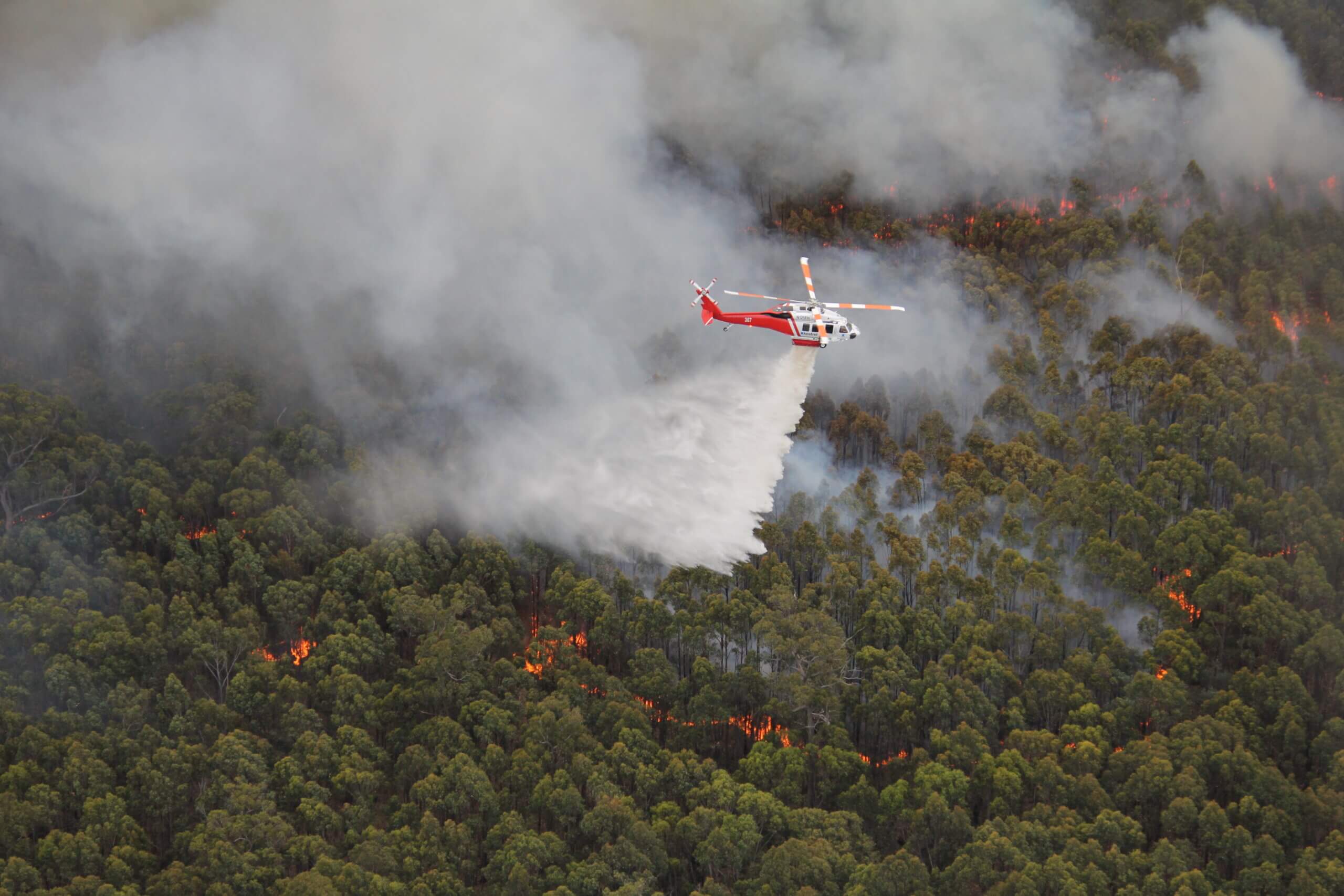
From a theoretical economic perspective, the return on investment of aircraft is the greatest when such policy settings are optimised and fires are stopped early. However, the lack of data at a scientific standard to compare pre and post implementation of such policy means policy efficacy is very challenging to study.
Because incipient fires behave differently than steady state fires, and often the best intelligence on fire behaviour comes from aircraft, there is a paradox involved with not ever knowing if such fires needed the support that they received or not. To address this, fire agencies in Victoria are investing in fire reconstructions to collect the standard of data required to answer these questions. The focus for this work is on fires where a) the fire was a close call, meaning the fire was almost or just contained thanks to surge resourcing, and b) where there is sufficient data on fire behaviour to answer the questions.
While the benefits of aircraft during initial attack are well understood and documented, their use and effectiveness during extended attack and on larger fires are not. During initial attack, the objective for most suppression is simply to contain a new fire start as soon as possible, however, objectives can be much more varied for fires that have escaped initial attack efforts. This makes understanding the goals and effectiveness of aircraft use during large fires much more complex and is also likely why the subject has received very little research attention. This is concerning because large fires tend to have significant aircraft deployments that can persist for multiple days.
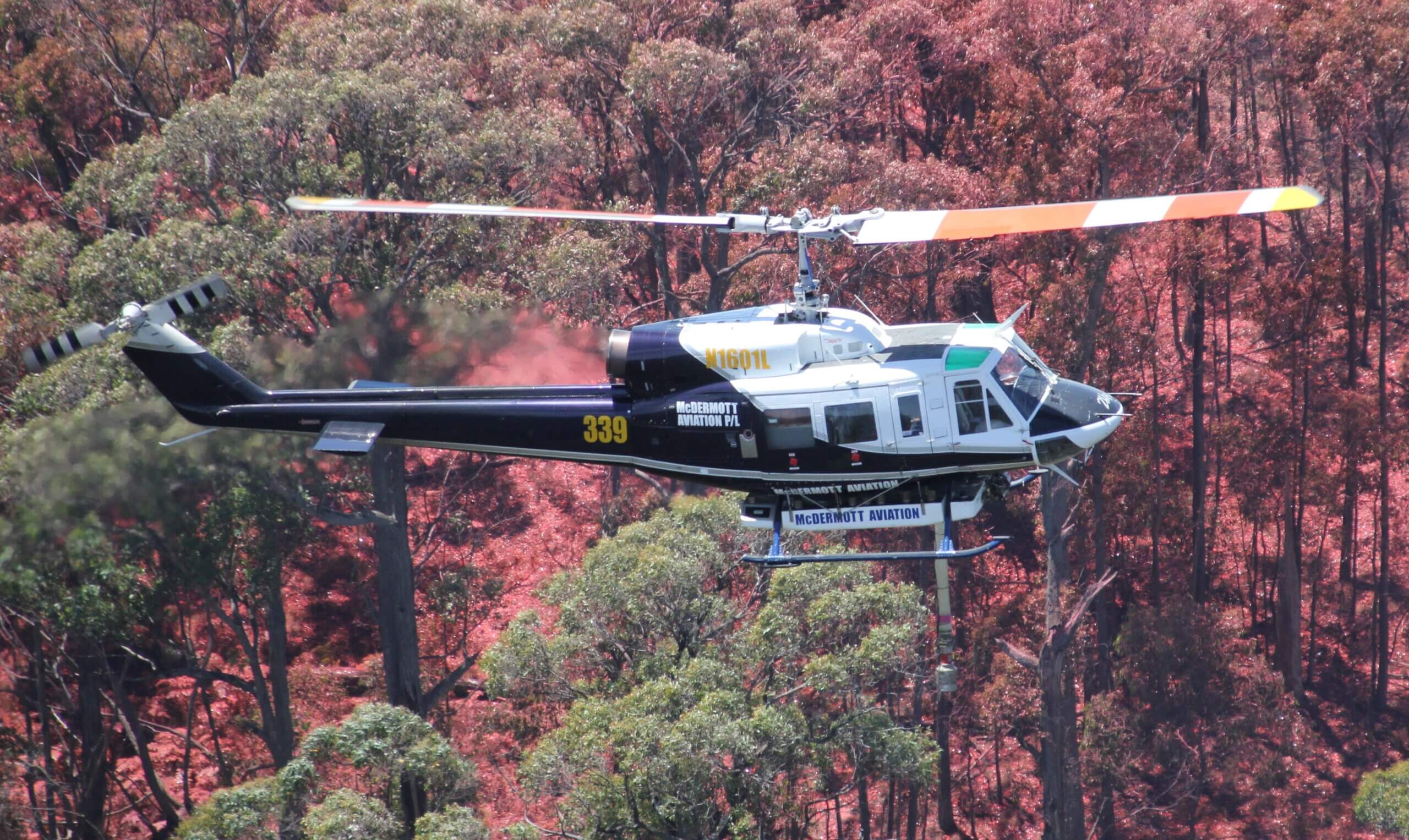
Aircraft tracking and event records are emerging as an important new data source for analyses of operational responses to fires. Aircraft that are contracted through Australia’s National Aerial Firefighting Centre (NAFC) have been required to provide accurate and timely location and event reporting for a few seasons. This change requires the aircraft to be fitted with position reporting, event-reporting, and messaging equipment and to transmit this data within minutes of collection.
The data collection and transmission operate in the background without influencing operations, thereby providing a true representation of events.
The utility of this data for supporting research on aircraft use and effectiveness has only been explored in a single scoping study that examined data collected during a single season in one state. This study demonstrated that aircraft tracking and event data has great potential for supporting research; it also revealed some issues with completeness, in terms of numbers of aircraft being recorded, and the reliability of some fields, particularly those related to drop volumes and contents.
A further consideration for research using aircraft tracking and event data is that it can only provide some of the information required for studies of firefighting aircraft. Other data sources such as agency records (including fire progression isochrones, situation reports and intelligence logs), interviews with key personnel, and imagery and videography captured during operations, are required to provide critical information on suppression objectives, fire behaviour, environmental conditions and supporting suppression responses.
A new research project funded by Natural Hazards Research Australia and supported by NAFC and state and territory fire agencies will use event reporting data to investigate the application and effectiveness of aerial firefighting. The project, titled Why fly? How do we know that aerial firefighting operations are effective and efficient?, aims to describe the current aircraft use profile and evaluate the effectiveness of aerial fire fighting across Australia using case studies compiled from a range of conditions and locations.
While the Why fly? project is a great step forward to enhance Australia’s understanding of the use and effectiveness of aerial suppression, as a 1.5-year project, it will not be able to address many unresolved fire aviation effectiveness issues facing Australia and intends to make recommendations for further research and analysis.
Important issues, such as line productivity and holding, non-bombing aircraft benefits, cost effectiveness, and the effectiveness of retardants and suppressants are not being investigated in this project or any other current or planned research. For these reasons, continued improvements in data capture, completeness and availability are needed to increase the understanding of how aircraft, and other suppression resources, are applied and what they can and cannot be expected to achieve. These changes, along with further research into the many unresolved fire aviation issues previously listed, will help Australia work toward a safer, more effective and cost-efficient application of aircraft on the country’s fires.
Matt Plucinski, Nick McCarthy and Owen Price contributed to the overview story on page 12; see their bios on page 14 and 16.
Deb Sparkes is the aviation research and evaluation manager at the National Aerial Firefighting Centre (NAFC), a business unit of AFAC. With extensive experience leading national bushfire management initiatives, Sparkes has played a pivotal role in projects such as the development of the new Australian Fire Danger Ratings System, prescribed burning guidelines, and Spark, Australia’s newest bushfire simulation tool. Driven by a passion for knowledge exchange, Sparkes is committed to fostering collaboration and creating networks that spark innovation and drive progress.