ASSOCIATION AWARDS SCHOLARSHIPS
Each year, the IAWF awards two graduate-level scholarships, each valued at US$3,000, to IAWF members who are master of science / arts or doctoral candidates studying wildland fire or wildland fire-related topics.
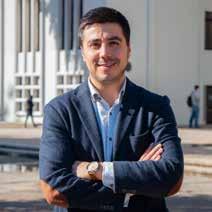
Javier Freire Herrera is a PhD candidate in public health at the University of California, Berkeley, in the environmental health sciences program. Herrera’s research focuses on the effects of environmental conditions, particularly extreme heat and air pollution, on the health of wildland firefighters in Chile.
During the 2024-2025 wildfire season, Herrera conducted a field study with the support of public and private institutions in Chile. Between December and February, Herrera conducted on-site measurements using wearable sensors to monitor, in real-time, physiological variables such as sweating, heart rate, energy expenditure, core body temperature, among others. Herrera also recorded environmental indicators, including the Wet Bulb Globe Temperature (WBGT) and fine particulate matter concentrations (PM2.5), among others.
Data collection occurred during active wildfire suppression and training and routine activities. Additionally, Herrera surveyed 357 wildland firefighters to assess their perceptions of heat stress and other critical aspects of their daily work. Herrera is in the data analysis phase, under the supervision of his academic advisor, Dr. Carisa Harris, and they expect to publish the results of this study soon. Herrera holds a degree in physical therapy (2009) and a master’s in ergonomics (2011), both from the University of Concepción in Chile.
Since 2010, Freire has served as a faculty member at University of Concepción, participating in research projects related to ergonomics and occupational health, including the annual assessment of the physical conditions of wildland firefighters in Chile.
In 2020, Herrera was awarded a Fulbright scholarship to pursue doctoral studies in the United States, which he is currently undertaking in California alongside his family. Herrera’s academic goal is to develop applied research that contributes to improving the health and safety conditions of workers exposed to extreme environments, and to help prevent illnesses associated with occupational overload in the context of climate extremes.
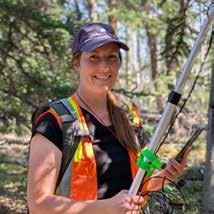
From a young age, Shyloh van Delft was captivated by the natural world, developing a particular fascination with birds. Alongside this, her strong sense of community and respect for fire led her to join a local volunteer fire department as a teenager, where she served for several years before beginning her undergraduate studies. Van Delft pursued a bachelor’s degree in northern environmental and conservation sciences through a joint program offered by the University of Alberta and Yukon University.
Now a master’s student, van Delft continues her studies remotely from her home in Canada’s Yukon Territory through the same academic partnership. Her research, in collaboration with Yukon Wildland Fire Management, Ta’an Kwäch’än Council, Kwanlin Dün First Nation, and other partners, explores how wildfire mitigation strategies affect wildlife and ecosystems in the Yukon’s boreal forest. Specifically, van Delft is investigating how tree cavityusing species respond in different ways to forest fuel reduction treatments such as FireSmart™, shelterwood, and partial retention harvesting.
Van Delft’s research aims to advance understanding of how wildfire mitigation strategies influence northern boreal ecosystems and seeks to inform wildfire risk reduction planning that safeguards communities while supporting long-term environmental stewardship and ecological resilience.